Herbal Juices for Everyday Wellness: Important Factors to Review Before Starting
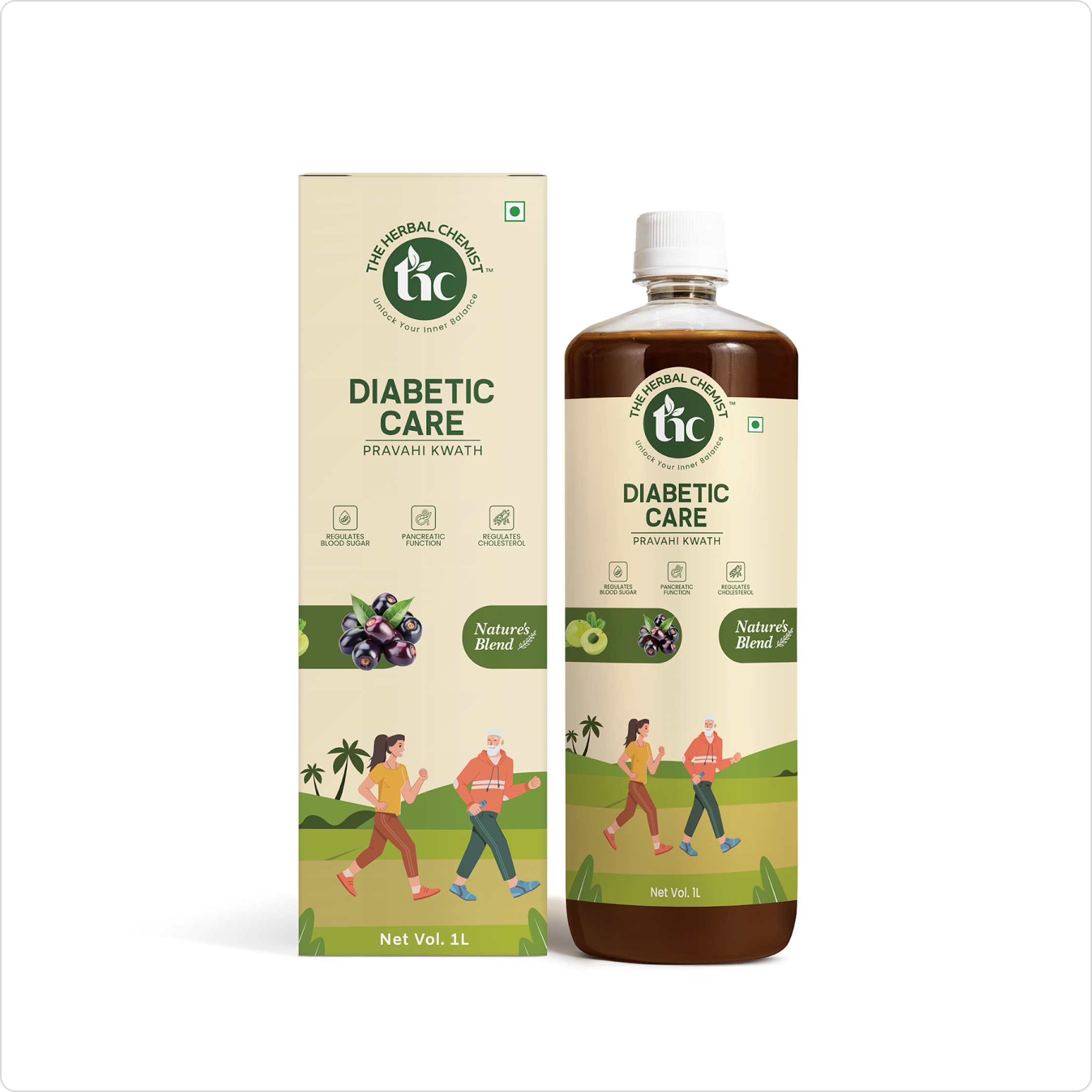
A bottled herbal preparation can look like a straightforward addition to breakfast. Yet choosing one involves more than deciding whether its ingredients sound familiar. The particular plant, method of preparation, entire ingredient list and intended user all deserve consideration. This becomes especially important when someone hopes to support blood glucose management or immune wellbeing.
Giloy juice alongside preparations combining neem, karela and jamun are frequently mentioned in conversations about traditional wellbeing. Their connection with Ayurveda may attract attention, but traditional use does not establish that every bottled preparation delivers a particular health benefit. The most practical place to begin is by examining what the product contains, what its claims mean and whether it belongs in your routine.
Rather than allowing expectations of benefits to lead the decision, begin with a practical question: what difference would including this product make to your present treatment, diet and daily routine?
Decide What You Expect the Juice to Do
Individuals consider herbal products for a variety of reasons. An individual might be interested in learning about traditionally used herbs, while another may hope to improve a raised blood glucose reading. Others might simply want a convenient addition to their wellbeing routine during a busy working week. Such expectations call for different discussions.
A broad curiosity about traditional herbal products must not become a belief that the preparation can treat an illness. In the same way, fatigue alone does not demonstrate that immune function needs improvement. Continuing fatigue, unusual thirst or other symptoms without a clear explanation should be evaluated rather than addressed by trying several herbal wellness products.
Establish your reason for considering the product before selecting one. When the intended use relates to diabetes, repeated illness or a pre-existing medical condition, discuss the actual preparation with a qualified healthcare professional. Knowing only the botanical ingredient does not offer enough detail for a proper suitability assessment.
A clear purpose also helps prevent unnecessary purchases. A particular formulation should not automatically become a regular purchase simply because its benefits are described in broad, reassuring language.
Why Similar Ingredient Names Do Not Always Mean Similar Products
Names including neem karela jamun juice, neem jamun karela juice and karela neem jamun juice place the same three familiar ingredients in different orders. However, the wording does not establish that the products are equivalent. The relative quantities, botanical parts used, strengths and supplementary ingredients can vary.
Known as bitter gourd, karela is a vegetable included in traditional formulations. Jamun products may use different parts of the plant, while neem preparations require attention to the material included. Evidence concerning one plant part cannot automatically be applied to another.
Neem karela juice and a formulation that additionally contains jamun are not necessarily the same. Introducing an additional botanical alters the mixture, yet this change does not by itself demonstrate improved results. A greater number of ingredients can complicate identifying the substance involved should an undesirable response arise.
Compare the complete ingredient statements instead of judging products by the prominent wording on their packaging. When quantities or preparation details are unclear, acknowledge that uncertainty instead of assuming two bottles provide the same contents.
Separate Traditional Use from Demonstrated Results
Ayurvedic traditions include longstanding methods concerning nutrition, daily habits and plant-based preparations. Understanding that context can help explain why particular herbs remain familiar. However, an account of traditional use answers a different question from a clinical study testing whether a specific preparation improves a defined outcome.
Laboratory observations must also be considered as a different category. A botanical compound may exhibit activity in laboratory cells or animal studies yet fail to provide a beneficial and safe outcome in humans. Research must also consider the amount used, the preparation and the duration of exposure.
Regarding diabetes, research on herbal supplements remains inadequate to confirm consistent therapeutic advantages. Studies examining bitter melon and additional plant-based ingredients face limitations, including inconsistencies across products and limitations in how studies are designed. A promising finding should therefore not be presented as proof that a commercially available juice can control blood glucose.
Traditional applications, laboratory activity and established clinical outcomes should be understood as distinct categories of information. Understanding these differences supports an informed interest in Ayurvedic practices without making unsupported assumptions about what an individual herbal product can accomplish.
Consider What Herbal Immunity Claims Actually Mean
Marketing language referring to giloy juice for immunity can create the impression that drinking the formulation directly lowers the chance of becoming unwell. However, “immunity” is a general expression, and the phrase alone does not identify a measurable benefit, a suitable user or an appropriate duration.
Examine the precise meaning behind the claim. Is it supported by human research involving that specific formulation, or does it simply draw upon information about traditional applications? Does the statement identify a defined result, or is the wording limited to broad expressions connected with health and wellness?
Similar caution is appropriate when considering giloy tulsi juice. The inclusion of two traditionally recognised herbs does not prove that the resulting product protects against infections or works more effectively than either individual herb. Evidence or claims relating to one ingredient should not simply be extended to a multi-ingredient formulation.
Treat broad immunity wording as a reason to examine the evidence more closely. It should not determine whether to postpone assessment when infections recur or symptoms continue.
Consider Safety Before Prioritising Convenience
A liquid preparation may be convenient, but convenience does not establish safety. Ingredients derived from herbs can sometimes result in adverse responses, and their suitability may change according to a person’s medicines and medical history.
Specific caution is warranted when considering giloy. Clinical reports in the published literature have linked Tinospora formulations with liver damage. Such reports do not indicate that harm occurs in everyone who uses the product, but it makes blanket assurances that giloy juice is harmless inappropriate. Those with a history of liver disease or an earlier unwanted response to supplements should seek individual medical advice before considering it.
If symptoms such as yellow eyes or skin, dark-coloured urine, marked nausea or unusual exhaustion appear when consuming a herbal formulation, stop using it and obtain prompt medical assessment. Keep the packaging so the ingredients can be reviewed.
Individual medical consideration is also important during pregnancy, breastfeeding, childhood or when multiple medical conditions are present. A formulation considered suitable for one adult at home should not be given to other family members without considering their individual circumstances.
Consider Prescribed Blood Sugar Treatment Before Using Herbal Products
People receiving medical treatment for diabetes need particular care rather than someone whose interest is limited to learning about botanical preparations. Herbal formulations can potentially interact with prescribed treatments, and some ingredients may influence blood glucose. Combining products without review can make their effects difficult to predict.
Have the full ingredient information and a correct record of your medicines available for review. Remember to include additional supplements and treatments used occasionally. Mentioning only that you take “a natural juice” does not provide the information necessary for a meaningful review.
Do not reduce or stop prescribed treatment merely because an herbal formulation claims to support balanced blood glucose. When a medical professional assesses a product as suitable, agree how its use will be reviewed and whether monitoring needs adjustment.
Unanticipated changes in blood glucose need to be reviewed with the healthcare professional managing your treatment. A reduction in a glucose measurement does not necessarily represent a positive outcome, notably if the value is lower than the recommended personal range or appears together with concerning symptoms.
The Label Should Answer Practical Questions
Look beyond the headline ingredient. A useful label should help you identify what is in the bottle, appropriate serving instructions, handling requirements and safety precautions. Confirm if the drink is intended for immediate consumption or must first be mixed with water; its colour or appearance alone cannot establish the correct method of use.
Check the full nutritional declaration whenever it is supplied. Bitterness is not evidence that an herbal beverage is sugar-free, and “no added sugar” does not necessarily mean there is no carbohydrate. Understanding these details helps when considering how a drink fits within someone’s dietary arrangements.
It is also important to differentiate liquid extracts, decoctions and drinks made with botanical ingredients. A resemblance in packaging cannot confirm that two formulations have similar concentrations. A serving size from one product should not be carried over to another.
If the label leaves essential questions unanswered, avoid filling those gaps with assumptions. Clear product information is a practical requirement for making an informed choice.
Quality Claims Need a Clear Meaning
Promotional expressions such as natural, pure or carefully prepared can appear comforting despite offering limited practical detail. These statements do not demonstrate that a formulation treats or improves a medical condition or suitable alongside a particular medicine.
References to laboratory analysis should likewise be understood within their specific limits. Such testing can relate to botanical identification, contamination levels or different measures of product quality. In the absence of additional details, testing does not confirm that the formulation has been evaluated in a clinical study or delivers the benefits described in its marketing.
Examine the condition of the packaging, batch details, expiry date and recommended storage arrangements. Once opened, use the handling guidance supplied for that product. Avoid assuming that every herbal beverage remains usable for the same period or needs identical refrigeration.
A favourable opinion of a particular herbal preparation should not automatically apply to every product using that herb. Manufacturing and formulation details belong to the individual product so each formulation deserves its own review.
Make Your Herbal Routine Easy to Monitor
Beginning several botanical preparations and dietary supplements simultaneously can make it challenging to recognise the effects of individual products. Should digestive discomfort or a different symptom appear, identifying the responsible preparation becomes harder. Using several formulations can additionally make it easier to miss ingredients appearing in more than one bottle.
When guidance from a qualified professional indicates that a formulation may be suitable, document the product name, full ingredient information, date of introduction and suggested method of use. Document unusual reactions rather than disregarding them as a normal adjustment or a sign that the product is working.
Do not raise the serving quantity simply because no clear effects have appeared. Not observing an obvious difference does not mean that increasing the quantity would be beneficial. Nor should missed servings be compensated for by taking extra.
Plan a review rather than presuming that the preparation should be used permanently. The assessment needs to account for unwanted effects, applicable clinical information and the ongoing purpose of taking the preparation.
Protect the Habits That Already Matter
A daily herbal preparation may work against wider wellbeing goals if it distracts from meals, movement, sleep or medical follow-up. The ease of using the preparation should not make it seem more valuable than the wider pattern of daily care.
For someone managing blood sugar, practical questions often concern regular meals, suitable portions and a plan that fits work and family life. A dietitian can help adapt these choices to personal needs without making every meal unnecessarily restrictive.
Consider an office worker who adds a morning juice while still regularly missing lunch and failing to take prescribed medication. The new purchase does not resolve the underlying difficulty. An approach that supports regular eating and consistent prescribed treatment help tackle the more pressing concern.
In the same way, consuming an herbal beverage must not provide an excuse to ignore symptoms or delay recommended tests. The useful measure of a wellness routine is how well it fits responsible care, rather than how many products it includes.
Conclusion
Choosing herbal juices thoughtfully starts with realistic expectations and complete information. Recognisable herbal ingredients can account for interest in a particular preparation, karela neem jamun juice yet they do not prove clinical benefits, similarity between formulations or appropriateness for an individual. Look closely at the preparation, evaluate its claims with care and consider prescribed treatments and personal health history before introducing it. Where professional evaluation supports the use of a preparation, make its use straightforward to monitor without allowing it to replace established treatment or consistent everyday health practices.
Comments on “How Much is it Worth For giloy tulsi juice”